Blue Monday: the emotional weight of January
The term originated as a marketing strategy, but specialists explain why January is often perceived as an emotionally challenging month

Carolina Vizcarra
Read this article in spanish
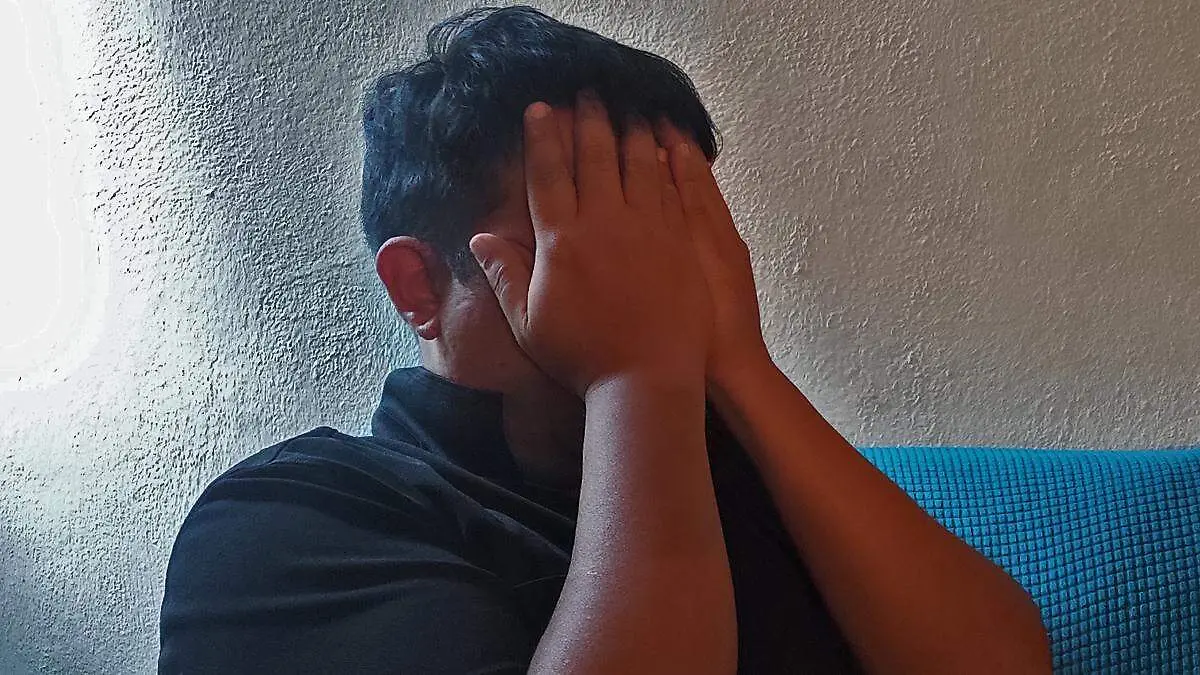
Even so, mental health specialists agree that January can indeed be a challenging period for many people, due to a combination of economic, emotional, and social factors that may influence mood and the perception of time during the first weeks of the year.
The origin of a concept with no scientific basis
Get the most important news from Baja California Sur through our newsletter!
Today, Blue Monday is considered a pseudoscientific phenomenon; however, its persistence in the collective imagination has served as “a starting point to discuss the emotional state of the population at the beginning of the year.”
January and the perception of emotional distress
According to psychologist Carlos Armando Romero Tirado, president of the National Federation of Colleges, Societies, and Associations of Psychologists in Mexico, the month of January tends to concentrate several elements that can affect mental health, particularly from the individual’s perspective.
He pointed out that this situation is linked to cognitive distortions, such as the expectation of immediate reward. “We think everything will happen right away, or that there will be no obstacles, and when that doesn’t occur, discomfort appears, which can lead to stress, anxiety, or depressive symptoms,” he explained.
Financial stress and warning symptoms
Romero Tirado emphasized that the impact of debts acquired at the end of the year is not limited to the economic sphere. “People often think economic health is the most important thing, and that affects all other areas of life: family, education, and emotional well-being”, he said.
He also warned that in some cases there is an exaggerated perception of problems. “People may fall into a cognitive distortion called catastrophizing, where problems are perceived as much larger than they actually are, making it harder to seek solutions,” he explained.
The specialist also stressed that January is a relevant month in terms of risk. “It is often thought that December is the most critical month, but in Baja California Sur, January usually records higher suicide rates,” he noted.
Epidemiological overview in Baja California Sur
During January 2025, 42 cases of depression were reported, while in the same month of 2024, 75 cases had been recorded. However, other indicators related to self-inflicted injuries showed increases.
In 2025, 19 cases of self-inflicted poisoning with non-narcotic analgesics were recorded, compared to 15 cases in 2024. Cases of poisoning with antiepileptic drugs, sedatives, and psychotropic substances also increased, from 23 to 29 cases.
Self-inflicted injuries caused by sharp objects rose from eight cases in 2024 to 19 in 2025, while suicidal ideation cases increased from 21 to 37 over the same period. In contrast, recorded suicide attempts decreased, from 38 to 25 cases.
The importance of addressing mental health
Romero Tirado highlighted that avoiding economic problems often intensifies emotional distress. “Avoidance is very common: people stop paying bills, delay using credit cards, and that generates more interest and more stress,” he explained.
He noted that taking concrete actions can create a sense of control. “When a person begins to face the situation, even little by little, it provides psychological relief,” he said, emphasizing the importance of financial organization and social support.
He added that psychological care is a key tool in addressing these situations. “Psychotherapy is one of the best alternatives for dealing with economic, family, or emotional problems when they get out of control,” he stated.
Where to receive psychological care in Baja California Sur
In La Paz, residents can go to the State Coordination of Mental Health and Addictions, located on Nicolás Bravo Avenue, at the corner of Josefa Ortiz de Domínguez, first floor, downtown area. The contact phone number is 612 122 53 52.
Also available is CISAME La Paz, located on De los Deportistas Avenue, Fuerza Aérea neighborhood, ZIP code 23070, phone number 612 121 14 44.
Another option is the UNEME Community Mental Health and Addiction Center La Paz, located on Francisco King Street, between Durango Street and Alley No. 2, in the Agustín Olachea neighborhood. The contact phone number is 612 121 62 49.
Additionally, the Smoking Cessation Clinic is located on Nicolás Bravo Avenue, at the corner of Josefa Ortiz de Domínguez, first floor, downtown area, with the phone number 612 122 46 59.
The CISAME San José del Cabo also operates at Manuel Doblado No. 39, in the 5 de Febrero neighborhood, next to the health center or the Sanitary Jurisdiction. The phone number is 624 142 44 96.
In Comondú, the UNEME Community Mental Health and Addiction Center Ciudad Constitución is located on Candelaria Street, between Punta Belche and Punta Baja, in the Santa Cecilia neighborhood. The contact number is 613 132 11 30.
For Loreto, the UNEME Community Mental Health and Addiction Center Loreto is located at Salvatierra Street No. 68, downtown area, next to the health center. The phone number is 613 135 13 45.
In Mulegé, the UNEME Community Mental Health and Addiction Center Santa Rosalía is located at Lot No. 14, Mesa de los Frailes, with the phone number 615 114 71 62.
Likewise, in Guerrero Negro, the UNEME Community Mental Health and Addiction Center operates on Emiliano Zapata Boulevard, between Durango Street, next to the health center. The contact phone number is 615 157 28 90.
In addition to these in-person services, the Línea de la Vida hotline is available at 800 911 2000, offering 24/7 emotional support, guidance, and accompaniment, free of charge and confidential.
NOTAS RELACIONADAS

Más Noticias






LO+VISTO



LO+RECIENTE