Academic studies published in 2010 reported volumes close to 1,000 tons annually, illustrating the scale of variation over just over a decade.
Market, consumption, and size dynamics
The growth of oyster bars and establishments specializing in seafood cuisine has expanded the consumption of bivalves in several cities across the country.
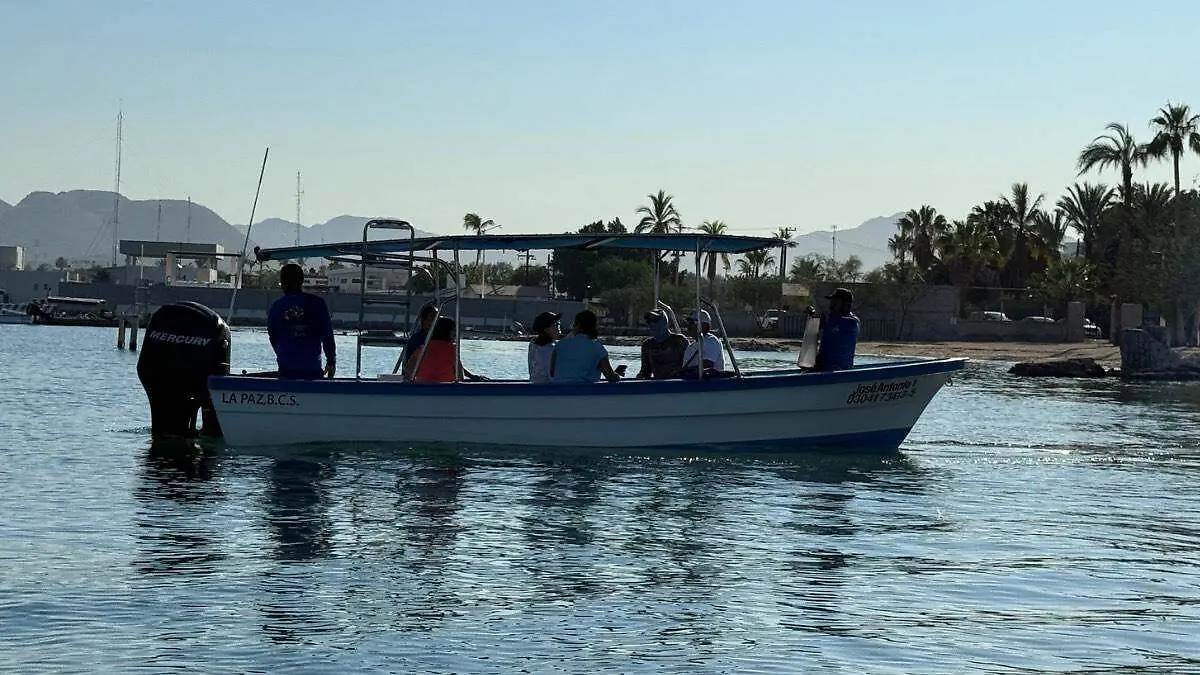
Among the options mentioned are finfish fishing, as well as the possibility of joining services associated with sport fishing, a segment that—he noted—continues to show growth in the municipality of Loreto.
Trabajadores sudcalifornianos cuestionaron que la Cámara de Diputados descartaran los dos días de descanso, mientras que el sector empresarial reclama que hicieron falta consensos
La ciclista sudcaliforniana recibió un estímulo económico en 2026, pero señaló la falta de apoyo médico y de infraestructura en el velódromo de La Paz.
En 2023 se aprobaron 7.4 millones de pesos para la compra de la maquinaria que retiraría el lirio acuático del Estero de San José del Cabo pero nunca llegó
The Baja California Sur cyclist received a financial grant in 2026 but highlighted the lack of medical support and inadequate infrastructure at the La Paz velodrome.
Workers in Baja California Sur questioned the decision by the Chamber of Deputies to rule out two days of rest, while the business sector claims that broader consensus was lacking.
In 2023, 7.4 million pesos were approved for the purchase of machinery to remove water hyacinth from the Estero de San José del Cabo, but it never arrived.
Durante el recorrido compartieron testimonios de abuso sexual, violencia vicaria y casos de presunto acoso dentro del Cuerpo de Bomberos, además de exigir justicia ante la falta de avances en denuncias
La movilización partió del malecón y concluyó en la Paloma de la Paz, donde se leyeron pronunciamientos, se compartieron testimonios y se escucharon consignas contra la violencia hacia las mujeres
Plate of chocolata clams ready to eat, one of the most representative bivalves of the Baja California Sur coast. / Photo: Alberto Cota / El Sudcaliforniano
Loreto, Baja California Sur.- Two months after the temporary ban on harvesting the chocolata clam (Megapitaria squalida) came into effect in the marine area off Loreto, both technical and production analyses point to the same issue: the progressive decline in the average size and availability of the resource.
The restriction, in force from January 1, 2026, to December 31, 2027, was established based on the technical opinion of the Mexican Institute for Research in Sustainable Fisheries and Aquaculture (IMIPAS), an agency within the National Commission of Aquaculture and Fisheries (Conapesca), with the aim of promoting the species’ population recovery and sustaining the fishery in the medium term.
From a technical perspective, oceanologist Ezequiel Hugo Hernández Zúñiga—who has more than 40 years of experience in the fishing industry and is the founder of the seafood trading company De Garo JA MAT—explained that the sustained reduction in size is a classic symptom of pressure on a population.
“When you see sizes decreasing gradually and continuously, you’re not giving the population a chance to recover. If you add to that the fact that you’re not getting the quantity you used to request, those are two very clear signs of a negative effect on the population you’re harvesting,” he noted.
Based on his experience in commercialization, a decade ago it was common to receive clams weighing around 300 grams each. Currently, he said, most specimens range between 150 and 180 grams, with some cases at 120 grams and, in more critical situations, pieces of 80 grams. “When someone pulls out an 80-gram clam, it’s because there weren’t any 100- or 120-gram ones left; it’s an indicator that the resource is no longer being found in the same proportion,” he explained.
The measure applies exclusively to the marine strip from 0 to 120 meters deep off the coast of the municipality of Loreto. It does not include Bahía Magdalena or Bahía Almejas, two strategic areas for this fishery in Baja California Sur, where the activity remains open for eight months of the year. In that region, harvesting is allowed from January to August, with a temporary closure from September 1 to December 31, according to the current regulatory calendar for those areas.
According to the National Fisheries Charter, the most significant catches of chocolata clam are recorded in Baja California Sur, which contributes around 81% of national production. The document indicates that after a period of gradual increases in catches until 2015, a downward trend was observed starting in 2016, reaching in 2023 one of the lowest production values in recent years, with approximately 600 tons reported (Conapesca, 2023).
The head of the Secretariat of Fisheries, Aquaculture and Agricultural Development of Baja California Sur, Alfredo Bermúdez Beltrán, explained that the decision is based on studies conducted by the Mexican Institute for Sustainable Fisheries and Aquaculture Research (IMIPAS).
“The ban is only in Loreto, not in Bahía Magdalena, and it is implemented in response to a study carried out by IMIPAS. The low extraction levels that currently exist result in the need for a two-year ban so the fishery in the Loreto area can repopulate,” he said.
Regarding the established period, he noted that “researchers and scientists say that in two years it will repopulate”, which will provide certainty to the fishery, a process that will continue under technical monitoring.
Fisherman at work in the coastal area; the chocolata clam fishery remains closed in the municipality of Loreto. / Photo: Alberto Cota / El Sudcaliforniano
The provision establishes that permit holders and concessionaires must present an inventory of existing stock at the beginning of the ban period, according to official formats, and specifies that transporting the product from the restricted zone requires a fishing guide validated by the competent authority.
Supervision of compliance falls to the Enforcement Directorate of the National Commission of Aquaculture and Fisheries (Conapesca), the body authorized to apply the measures established in the General Law of Sustainable Fisheries and Aquaculture.
Under that legislation and the Law of Sustainable Fisheries and Aquaculture of the State of Baja California Sur, administrative sanctions may include financial penalties, the seizure of vessels, fishing gear, or illegally obtained products, as well as the suspension or revocation of permits and authorizations.
In cases of illegal harvesting, federal regulations also provide for the possibility of preventive imprisonment and financial penalties ranging from 10,000 to 30,000 days of minimum wage, depending on the severity of the offense. Factors such as repeat violations and benefits obtained are considered when determining sanctions.
Regarding the reduction in specimen size, Alfredo Bermúdez Beltrán noted that market dynamics directly influence the characteristics of the product demanded. “That depends on what the market asks for. Now we’re seeing the same thing as with oysters: they want smaller clams so they can be served as bite-size pieces. That size, regardless of regulation, depends a lot on the **market,” he said.
Seafood vendors pose with a plate of clams, amid adjustments in supply following the start of the temporary fishing ban. / Photo: Alberto Cota / El Sudcaliforniano
In this context, Ezequiel Hernández Zúñiga noted that more than a decade ago the chocolata clam had a smaller presence compared to other species such as the pismo clam; however, its commercialization has steadily increased and it is now distributed nationwide, including Cancún, Tulum, Mérida, Monterrey, and Oaxaca.
From his technical perspective, allowing specimens to reach and surpass their reproductive size is a determining factor for resource stability. “You have to leave space for reproduction; otherwise, you deplete one area and then another,” he said, referring to the need to consider biological cycles when making extraction and consumption decisions.
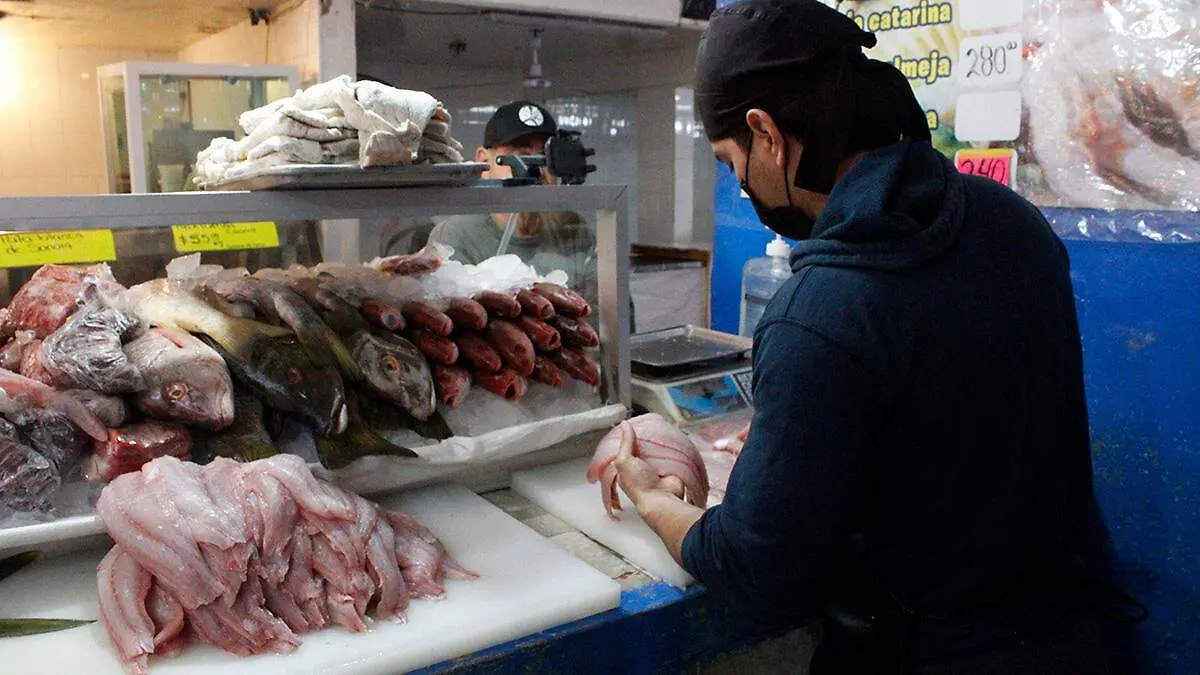
In this context, Hernández Zúñiga raised the shared responsibility of the gastronomic sector in consumption decisions. He pointed out that Mexico has consolidated itself as a gastronomic powerhouse and that the reinterpretation of seafood products by chefs and restaurants has strengthened demand for bivalves.
In that regard, he maintained that establishments can incorporate sustainability criteria into their purchasing decisions. Among the options he mentioned prioritizing larger specimens (around 200 grams) so they can reproduce beforehand, or voluntarily reducing consumption during certain periods to support the recovery of the resource.
“If you bring me clams of that size, we’ll take them; if not, I don’t want them,” he illustrated regarding the possibility of establishing purchasing parameters linked to weight. He also suggested that when the product is temporarily unavailable, other seasonal species could be used instead.
Right now, it is essential to communicate; it is essential to raise awareness.Ezequiel Hernández, oceanographer and founder of the trading company De Garo JA MAT
The estimated economic value of the chocolata clam fishery in the Loreto area is around 2 million pesos. According to Alfredo Bermúdez Beltrán, producers who hold permits for its harvest are usually authorized to participate in other fisheries as well, which, he said, allows them to diversify their activity and cushion the impact of the temporary suspension.
Two months after the ban began, monitoring the population dynamics in the restricted zone and the evolution of averagesize at commercialization points will be key indicators for assessing the scope of the measure. The outcome will depend on continuous scientific monitoring, compliance with current regulations, and market dynamics that influence the harvesting and consumption of one of the emblematic bivalves of the Sea of Cortez.