“Many of these products are used for just a few minutes and then left exposed; if they are not disposed of correctly, they can remain on the beach or be carried into the sea,” she said.
Regarding peak moments of waste generation, she explained that it becomes most evident after daily activities conclude, when attendance decreases and accumulated trash becomes visible.
Municipal Operation for Waste Management and Recovery
Desde temprana hora, brigadas realizaron labores de limpieza en el malecón mientras personal comenzó a retirar maderas y protecciones colocadas en edificios gubernamentales previo a la movilización del 8M
Trabajadores sudcalifornianos cuestionaron que la Cámara de Diputados descartaran los dos días de descanso, mientras que el sector empresarial reclama que hicieron falta consensos
La ciclista sudcaliforniana recibió un estímulo económico en 2026, pero señaló la falta de apoyo médico y de infraestructura en el velódromo de La Paz.
En 2023 se aprobaron 7.4 millones de pesos para la compra de la maquinaria que retiraría el lirio acuático del Estero de San José del Cabo pero nunca llegó
The Baja California Sur cyclist received a financial grant in 2026 but highlighted the lack of medical support and inadequate infrastructure at the La Paz velodrome.
Workers in Baja California Sur questioned the decision by the Chamber of Deputies to rule out two days of rest, while the business sector claims that broader consensus was lacking.
In 2023, 7.4 million pesos were approved for the purchase of machinery to remove water hyacinth from the Estero de San José del Cabo, but it never arrived.
The head of the Dirección de Sustentabilidad y Manejo de Residuos del Ayuntamiento de La Paz, Daniel Cabral Ramírez, reported that during the six days of the state’s most important celebration, 45.3 tons of garbage and 328.8 kilograms of recyclable materials were removed from the Malecón in La Paz, Baja California Sur—2.7 tons less than in 2025, when 48 tons were collected.
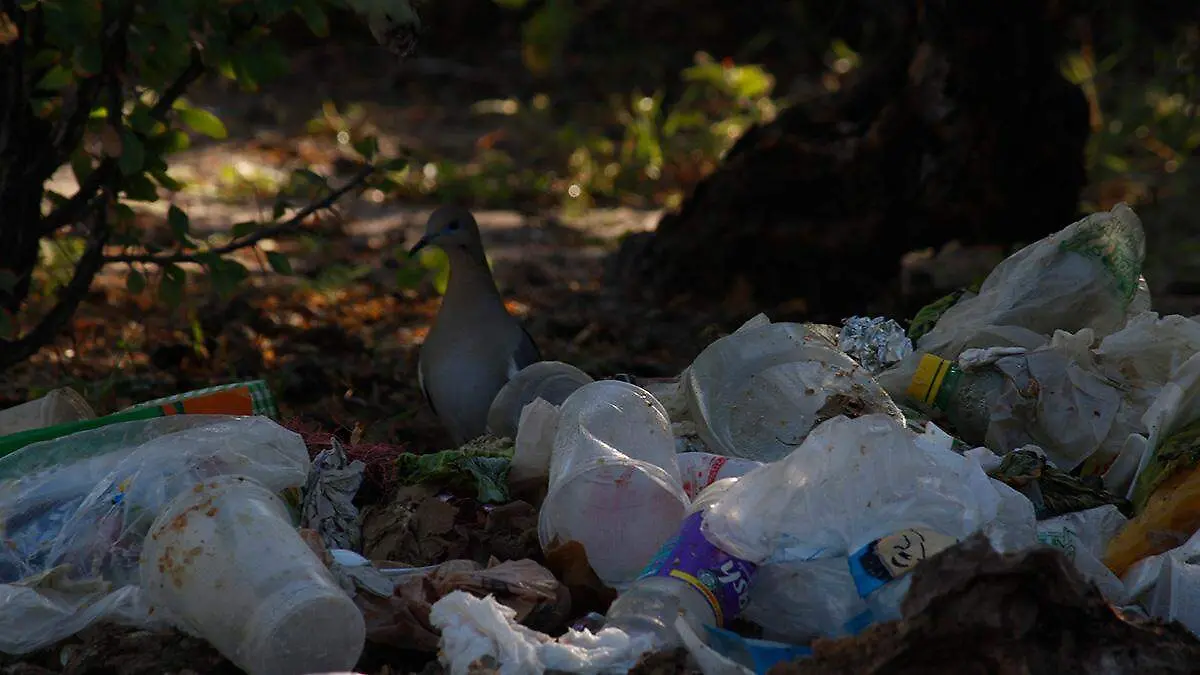
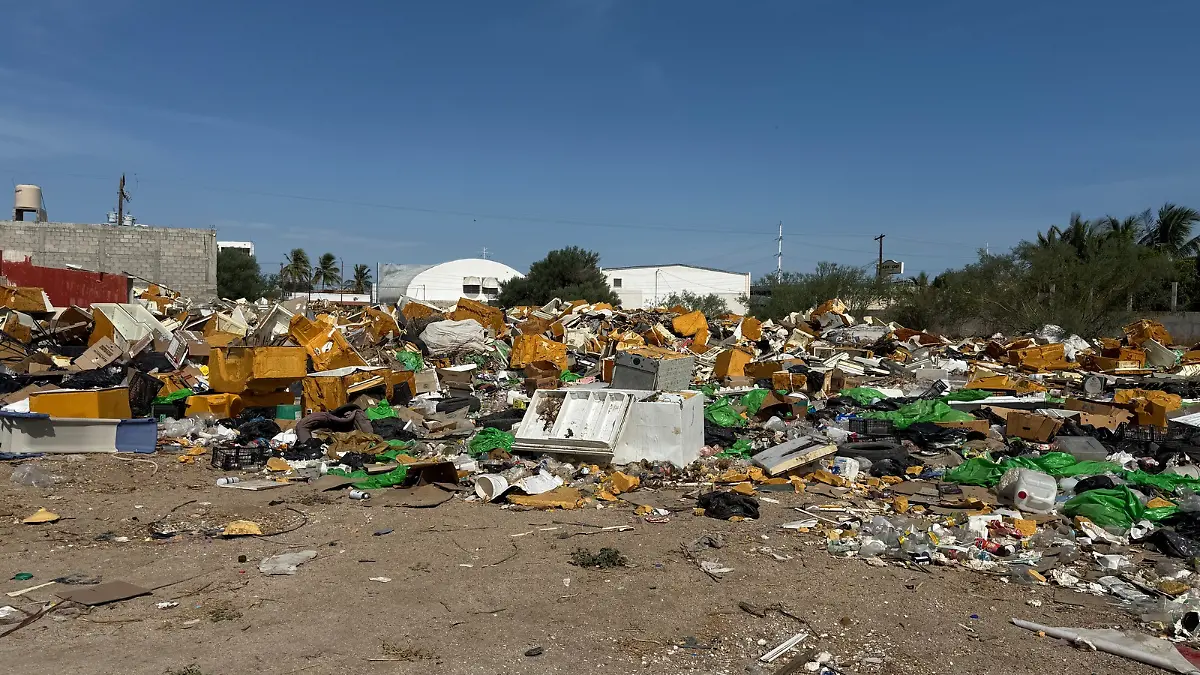
This year, both municipal authorities and local environmental organizations promoted actions to encourage vendors and attendees to avoid the use of plastics along the boardwalk. However, citizen reports and El Sudcaliforniano documented that a large portion of this waste ends up in the sea.
The 45.3 tons of trash are roughly equivalent to the weight of eight adult African elephants, 35 compact cars, 533 adults, or 29 hippopotamuses. One ton equals one thousand kilograms.
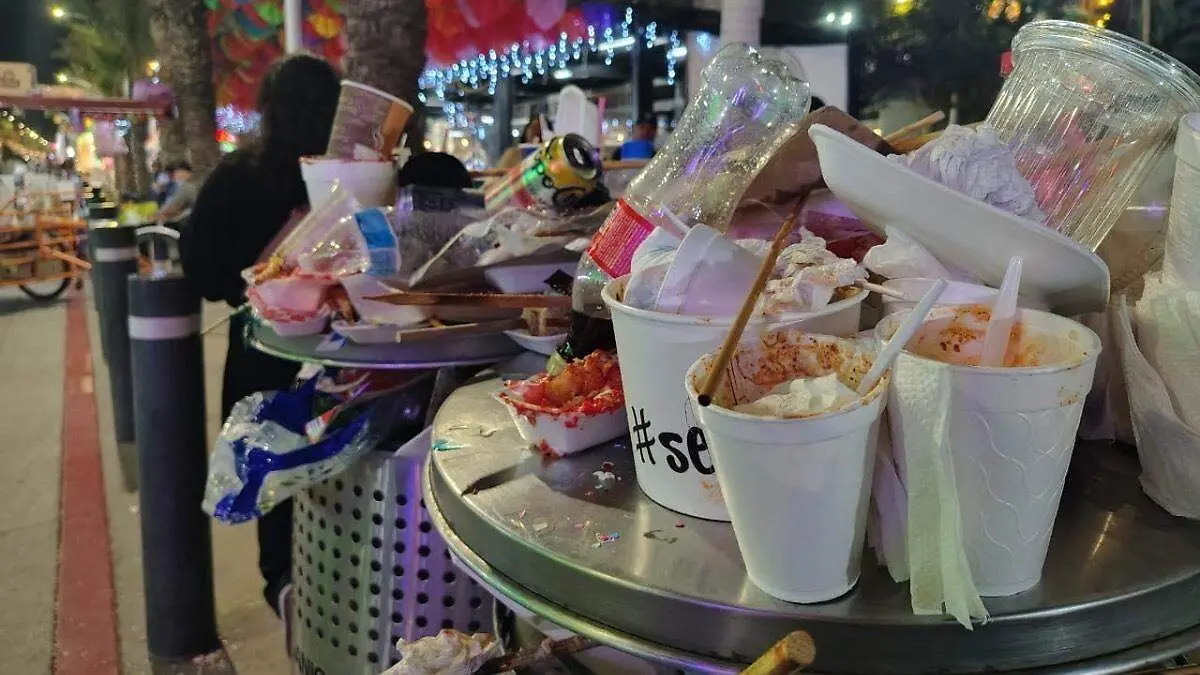
On the busiest days—particularly at the end of nighttime activities—flexible wrappers, disposable cups, plastic bottles, and food containers rank among the most common types of waste in the boardwalk area. This situation has been documented in previous editions and has led to the implementation of preventive measures by both government authorities and organized civil society.
In this context, environmental organizations strengthened awareness efforts aimed at both vendors and attendees. One of them is Ponguinguiola, a civil association focused on reducing single-use plastics, which for the fourth consecutive year participated in the Carnival by providing training to businesses operating within the venue.
According to Andrea Castillo, the association’s coordinator of training, capacity-building, and environmental education, prior to the start of the Carnival, vendors were given information about waste separation and alternatives to reduce the generation of disposable plastics. As part of this process, businesses made voluntary commitments, including offering discounts to customers who brought reusable tumblers or cups, as well as reducing the distribution of straws and unnecessary containers.
“At the end of each training session, vendors established specific commitments, whether for waste reduction or separation. Later, team members conducted follow-up visits to evaluate how these measures were working and the customer response,” Castillo explained.
As part of a pilot initiative, the association implemented a symbolic waste-avoidance tracking exercise at two establishments, where customers placed a sticker each time they used a reusable container. The goal was to evaluate public participation and make visible the reduction of plastics during the event.
From an environmental perspective, Castillo noted that the impact of waste on the marine ecosystem increases when trash is not properly disposed of, especially during events with large crowds and proximity to the sea.
View of the main stage area following the conclusion of the Carnival activities. / Photo: Alberto Cota / El Sudcaliforniano
In coordination with various municipal departments and civil organizations, the La Paz City Council launched a specific operation for waste management and recovery during the Carnival. According to the latest report presented by municipal authorities, based on information provided by Daniel Cabral Ramírez, head of the Directorate of Sustainability and Waste Management, an accumulated total of 28.5 tons of solid waste was generated during the first days of activities.
View of the main stage area after the conclusion of the Carnival activities. / Photo: Alberto Cota / El Sudcaliforniano
As part of the preventive strategy, training sessions were held prior to the festivities for vendors operating within the venue, resulting in the signing of commitment letters by 207 vendors, who agreed to use recyclable materials and refrain from using Styrofoam. Additionally, 84 businesses adopted an incentive scheme, offering discounts to customers who brought reusable cups, identifiable through the Ruta Cero program.
The official noted that, compared to the same period last year, the amount of waste collected shows an approximate reduction of two and a half tons, linked to compliance with agreements and public participation in waste separation and collection initiatives.
As part of the operation, Ruta Cero collection points were set up in three areas along the boardwalk: Rosales Street, Morelos Street, and the fiscal pier, identified as the busiest area due to the constant flow of families.
At these locations, recyclable materials such as aluminum cans and plastic bottles could be exchanged for reusable cups. Recreational activities for children were also organized, providing reusable bags to collect waste and access incentives in the play area. At the fiscal pier alone, more than 150 reusable cups were distributed during the first days of the Carnival.
One of the three Ruta Cero program containers installed along the boardwalk for the separation of recyclable materials during the Carnival. / Photo: Carolina Vizcarra / El Sudcaliforniano
At the same time, Municipal Public Services personnel maintained continuous cleaning operations along the coastal promenade, with more than 120 waste containers distributed throughout the area and night crews beginning work at 2:00 a.m. to carry out detailed cleaning. In total, more than 130 people participated daily in waste collection and sanitation tasks.
These actions were carried out continuously throughout the Carnival, with daily inspections to verify compliance with vendors’ commitments and with the aim of reducing waste accumulation and its potential spread into the marine environment.